
Guide
Written by Josh Nielsen, licensed plumber and gasfitter, A1 Plumbing Co
Storm season drain checklist for Logan and Brisbane homes
Storm season is here. The Bureau of Meteorology names October to April as Australia’s peak time for severe weather, and south-east Queensland’s afternoon storms can drop a lot of rain in a short time. When that happens, the weak points in a home’s drainage show up fast: gutters spill over, downpipes back up, stormwater pits overflow, and sometimes wastewater comes up outside the house.
Most of the storm-related drainage calls we get could have been avoided with an hour of checks in October. This checklist is what we’d look at on our own homes before the first big storm.
The 10-minute version
If you only do five things before the first storm:
- Clear your gutters and downpipes so water leaves the roof quickly.
- Run a hose into each downpipe and check the water drains away underground instead of bubbling back up.
- Lift the grates on your stormwater pits and scoop out leaves and silt.
- Find your overflow relief gully (the grate with a loose cap near the bathroom or laundry) and make sure it isn’t buried or covered.
- Know where your water meter stop tap and gas shut-off are, in case you need them in a hurry.
The rest of this guide explains each check and what to do if something isn’t right.
Before the storms: roof, gutters and downpipes
Gutters. Leaves and silt in gutters slow water down until it spills over the front edge, often right along the base of the house. The Queensland Government’s storm preparation advice is to clean gutters and downpipes so water can drain away, and to fix cracked or broken guttering.
Downpipes. A downpipe that overflows at the joint near the ground is usually a sign the underground stormwater pipe is blocked or broken, not that the downpipe is too small. To test it, run a garden hose into the top of the downpipe for a few minutes:
- If the water disappears, the line is probably clear.
- If it bubbles up at the base, or pools around the joint, the stormwater line below may be blocked by leaves, silt or tree roots, or the pipe may have cracked or come apart.
Overhanging trees. Trim branches over the roof and gutters. Leaf drop is the most common cause of blocked gutters and pits we see in established suburbs and bushland areas.
Stormwater pits and the pipes you can’t see
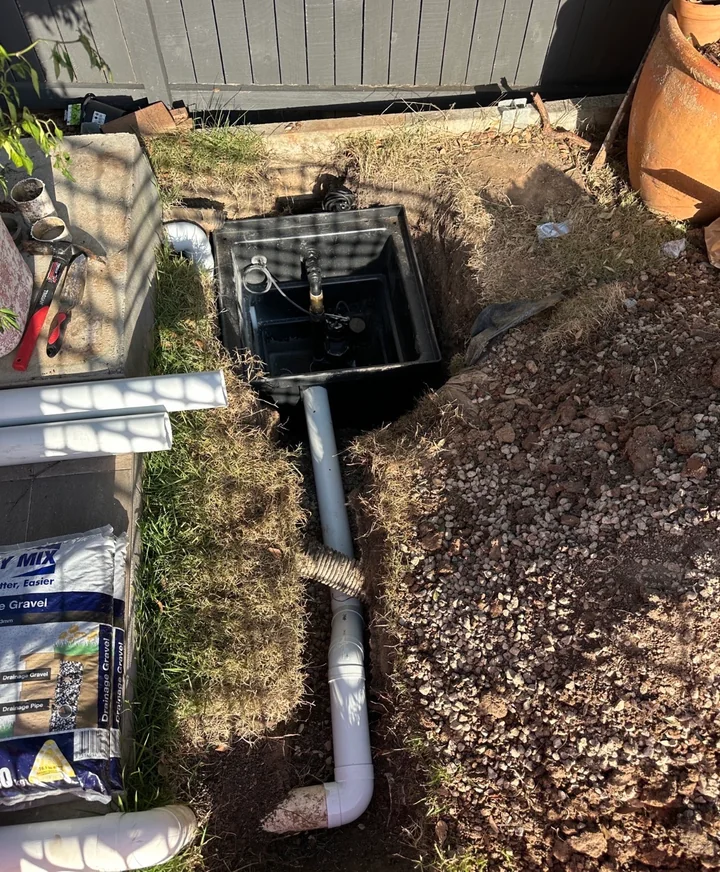
Most homes have one or more stormwater pits in the yard or driveway that collect surface water and roof water. Lift the grate and check:
- Leaves and silt sitting in the base of the pit. Scoop them out so the outlet pipe is clear.
- Water sitting in the pit days after rain. That usually means the outlet pipe is partly blocked.
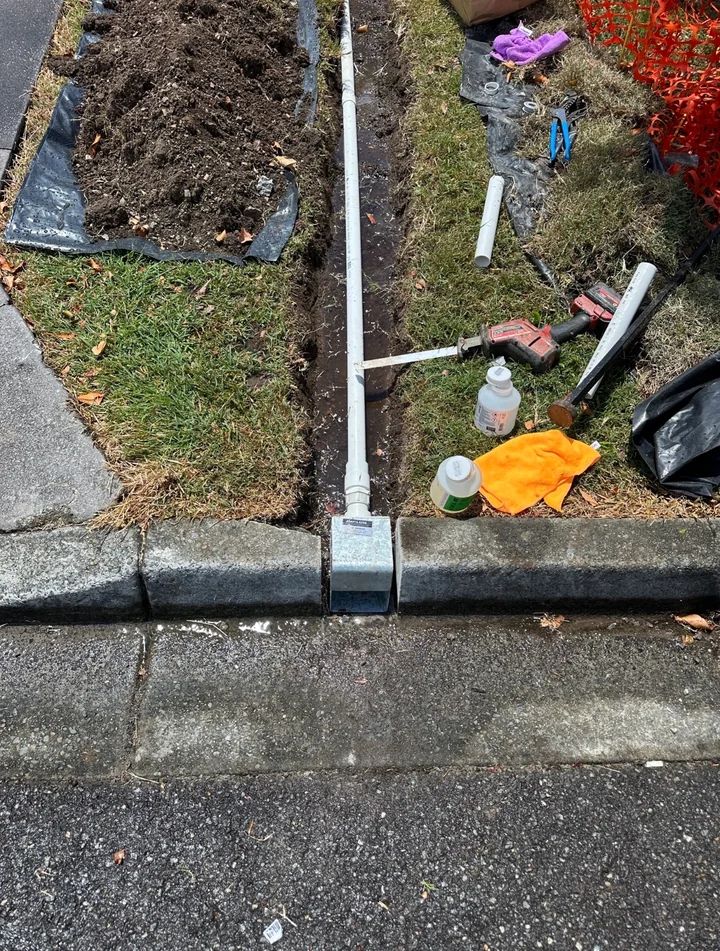
- Soft ground or small sinkholes near the pit or along the line to the street. This can mean a broken pipe is washing soil away.
Tree roots are a regular cause of recurring blockages in both stormwater and sewer lines. Roots can enter a pipe through a crack or a loose joint and grow inside it. If a line blocks again soon after it’s cleared, a drain camera inspection shows whether roots or a damaged pipe are the cause, so you’re not paying to clear the same blockage every storm.
Who looks after what? In Logan, City Council says property owners are responsible for managing stormwater and surface water on their own land, and roof water must drain to the kerb and channel, an inter-allotment drainage pipe or a council drainage easement. Your neighbour’s natural overland flow is something you generally have to accept, but water that has been concentrated or redirected onto your land is different. Logan City Council’s stormwater page explains the rules.
Your overflow relief gully: the most overlooked check
Your overflow relief gully (ORG) is a short pipe outside the house with a grate that sits loosely on top, usually near the bathroom or laundry. If your sewer drain blocks, or the system is overloaded in heavy rain, wastewater pushes the grate off and overflows outside instead of coming up through your shower or toilet.
Logan City Council says your ORG should be:
- at least 150 mm below the lowest drain fixture inside the house
- at least 75 mm above the surrounding ground, so rainwater can’t run into it
- never built over, planted around, or connected to downpipes or stormwater.
Over the years, gullies get buried under new paving, garden beds, mulch and turf. A buried or low gully can let stormwater pour into the sewer during a storm, and if the sewer blocks, the overflow can come up inside instead. If yours is hard to find, covered, or sits level with the ground, it’s worth having it checked and raised before the season.
Inside the house: slow drains are an early warning
A sink, shower or toilet that drains slowly or gurgles is often the first sign of a partial blockage in the line outside. In heavy rain, that partial blockage can become a full one. Fix slow drains before storm season, not during it.
What helps:
- Only flush toilet paper. Wipes marketed as “flushable” don’t break down like toilet paper and are a common cause of sewer blockages.
- Keep fat and oil out of the sink. Let it cool and put it in the bin.
- Use strainers in showers and sinks to catch hair and food scraps.
During a storm: what to do if a drain backs up
- Stay safe first. Keep away from water near power points, switchboards and appliances.
- If wastewater is coming up outside from the overflow relief gully, stop using toilets, showers and the washing machine until it’s sorted. That reduces how much water goes into a blocked line.
- If water is coming into the house from floor wastes or toilets during flooding, the Queensland Government suggests sandbagging indoor drains and toilets to help prevent sewage backflow.
- Don’t lift sewer inspection caps or open the gully to “let water in”. It sends stormwater into the sewer and makes overflows worse.
- Report council problems. In Logan, call Logan Water on 07 3412 3412 if the sewer main or a council maintenance hole is overflowing. For problems on your property, Logan City Council advises calling a licensed plumber first. Brisbane, Redland and Gold Coast homes report to their own water provider.
After a storm: what to check
- Clear silt and leaves out of pits and gutters again. Heavy rain often leaves a layer behind.
- Look for new damp patches, soft ground or sinkholes along stormwater lines.
- Watch for drains that gurgle or empty slowly in the days after rain. That can mean silt or debris is still in the line.
- Hot water and gas appliances that have been under water must not be used until they’ve been checked. Have a licensed gasfitter check gas appliances and a licensed electrician check electrical connections before you turn them back on.
When to call a plumber
Call us if you notice any of these, before or after a storm:
- downpipes that overflow at ground level in normal rain
- a stormwater pit that stays full days after rain
- an overflow relief gully that is buried, too low or has overflowed
- a sink, shower or toilet that is slow or gurgles
- a drain that has blocked more than once in a year
- soft ground or a sinkhole near a pipe line.
We clear blocked stormwater drains and sewer drains, use a CCTV drain camera to find the cause, and handle sewer and stormwater repairs, including relining where it suits the pipe. For gutters and downpipes, see our roof and rainwater work.
Call, let us know the problem, and we’ll confirm availability and agree on an arrival window. We assess on site and give you an upfront fixed price to approve before work starts.
Frequently asked questions
When is storm season in south-east Queensland? The Bureau of Meteorology describes October to April as Australia’s peak time for severe weather. Southern Queensland often sees severe thunderstorms early in the season.
Why does my downpipe overflow at the bottom when it rains? Usually because the underground stormwater pipe it connects to is blocked or broken, so water has nowhere to go. A hose test and, if needed, a camera inspection show where the problem is.
What is the grate with the loose cap outside my laundry? It’s your overflow relief gully. It lets wastewater escape outside if your sewer drain blocks, instead of backing up inside. Keep it uncovered and above the surrounding ground.
Can I connect my downpipe to the overflow relief gully? No. Logan City Council says downpipes and stormwater must not be directed into the gully. Stormwater in the sewer system adds to overflows in heavy rain.
Who pays to fix a blocked stormwater pipe? Pipes on your property are generally the owner’s responsibility. Council looks after its own mains and drainage infrastructure. If you rent, report it to your property manager or landlord.
Should I use drain cleaner before storm season? For a stubborn or recurring blockage, chemical cleaners rarely fix the cause and can damage older pipes. If a drain keeps blocking, get it cleared and checked with a camera instead.
Related: Blocked drains · Stormwater drain clearing · CCTV drain inspection · Sewer & stormwater repairs · Roof & rainwater · Local pages: Eagleby · Shailer Park · Beenleigh
Sources:
- Bureau of Meteorology, “Helping Australia prepare for severe weather season” (8 October 2026): https://www.bom.gov.au/news-and-media/helping-australia-prepare-for-severe-weather-season
- Queensland Government, Home maintenance for extreme weather: https://www.qld.gov.au/emergency/dealing-disasters/disaster-types/flood/flood-prepare/home-maintenance-for-extreme-weather
- Logan City Council, Sewage overflow (overflow relief gully requirements): https://www.logan.qld.gov.au/residents/water-and-wastewater/wastewater/sewage-overflow
- Logan City Council, Stormwater management: https://www.logan.qld.gov.au/building-and-plumbing/stormwater-management