
Guide
Written by Josh Nielsen, licensed plumber and gasfitter, A1 Plumbing Co
How long does a hot water system last? Repair or replace
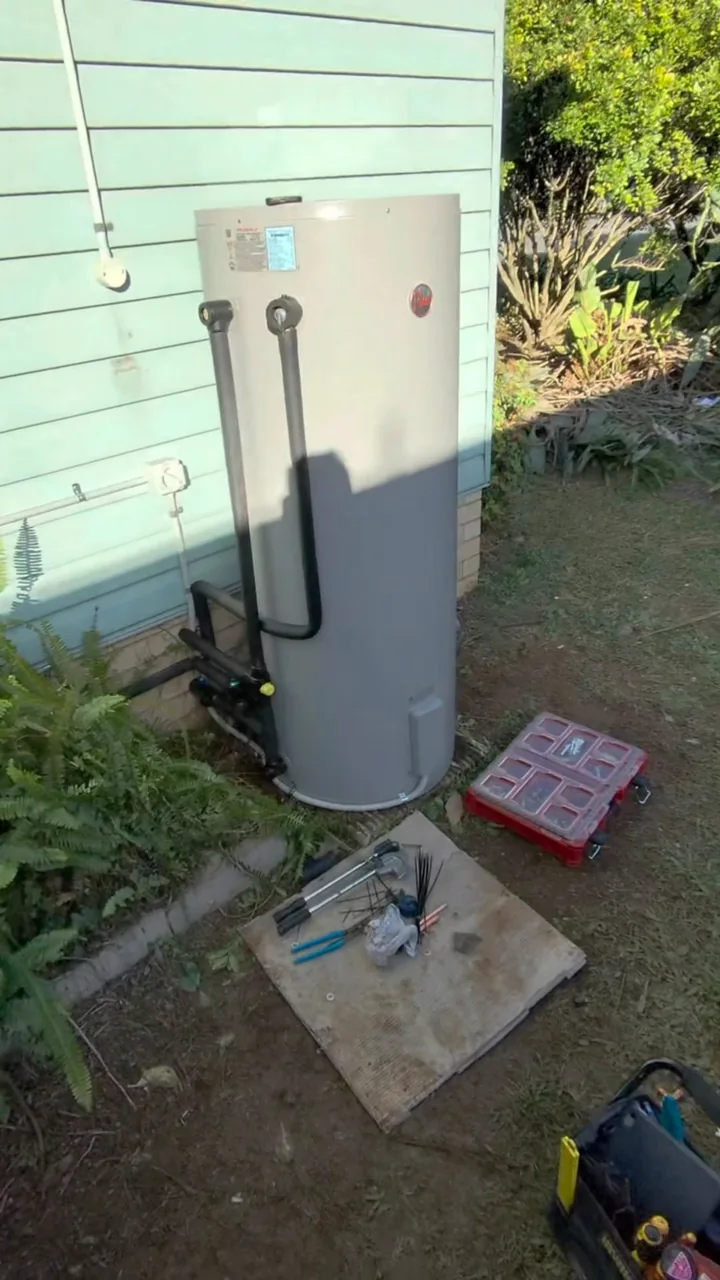
A hot water system usually gives you some warning before it stops. The trouble is that most people don’t know what the warnings look like, or whether an older unit is worth fixing.
This guide covers how long systems typically last, the signs yours is wearing out, and how we help customers decide between a repair and a replacement.
The short answer
In our experience, hot water systems commonly need replacing at around 10 to 15 years. Where a particular unit lands in that range depends on three things:
- the quality of the unit and how well it was installed
- the water it runs on, including whether the supply changes between tank and mains
- how well it’s been maintained, especially the relief valve and, on storage tanks, the anode.
Some units go longer. Some fail earlier, usually because a small problem was left too long or routine maintenance was never done. The age on its own doesn’t decide anything; the condition of the tank does.
How old is yours? Check the compliance plate or sticker on the side of the unit. It usually shows the model, serial number and often the manufacture date. If you can’t find a date, a photo of the plate helps us work it out.
Signs your hot water system is wearing out
Some signs point to the end of the unit’s life. Others are a fault that can often be fixed.
Usually a sign the tank is failing:
- Water around the base of the tank or dripping from the bottom of the unit (not from the relief valve pipe). A storage tank that leaks from the cylinder generally can’t be repaired.
- Rust-coloured hot water when the cold water runs clear. That points to corrosion inside the tank.
- Visible rust on the tank casing, especially near the base or the pipe fittings.
Worth a check, often repairable:
- The relief valve drips. Some water from the relief valve drain during heating can be normal, because water expands as it heats. A valve that runs constantly, or never releases any water when you lift the lever, needs checking.
- Hot water runs out sooner than it used to. On an electric unit this can be a failed element or thermostat. On any storage unit it can also be sediment build-up.
- Rumbling or knocking noises while the unit heats, which can be sediment at the bottom of the tank.
- No hot water, or the circuit breaker keeps tripping. This can be an electrical fault in the unit, but it can also be water reaching electrical parts from a leak. Switch it off at the switchboard and get it checked.
- A gas unit won’t stay lit, or the flame looks wrong.
If you smell gas, isolate your gas supply at the bottles or meter and call us. We’ll come out and assess.
If the tank is leaking onto electrics, switch the hot water off at the switchboard and turn off the cold water isolation valve going into the unit, if you can reach it safely.
Repair or replace: how to decide
This is the question we’re asked most often on hot water calls. Here’s how we work through it with customers.
Repair usually makes sense when:
- the unit is relatively young and the tank itself is sound
- the fault is in a replaceable part, such as a relief valve, tempering valve, element, thermostat or gas control, rather than the cylinder
- the unit has been maintained and this is the first real problem.
Replacement usually makes sense when:
- the tank is leaking from the cylinder
- the unit is near or past 10 years old and needs a major part
- you’ve had repeat repairs in a short time
- your household has changed, and the system no longer keeps up, or you want a different type (for example, moving to a heat pump or from electric to gas)
- parts are hard to get for an older or discontinued model.
In the middle?
For an older unit with a fault that can be fixed, the honest answer is often “you could do either”. In that case we price the repair and the replacement so you can compare them side by side, and explain what each option is likely to mean over the next few years. You choose.
We assess on site and give you an upfront fixed price to approve before work starts. We don’t publish prices because the right answer depends on the unit, the access and what’s connected to it.
A real example: Wishart, August 2026
A Wishart homeowner called us with no hot water and a circuit breaker that kept tripping. We found corrosion and a leak around the heat-exchanger housing of their 280 L heat pump, with water reaching electrical components. It couldn’t be reliably repaired.
We talked through the options, including other brands and solar, and recommended a Rheem 315 L electric storage system for this household. Once the customer approved, we removed the old unit and redundant pipework, installed the new system on a new base with new valves, fittings, pipework, drain line and insulation, and coordinated a licensed electrician to complete the electrical connection, upgrade the circuit breaker and add an isolation switch. We then flushed the system, bled the air and checked for leaks before handover.
Read the full write-up with photos and video: replacing a failed heat pump with a Rheem 315 L electric system in Wishart.
What’s involved in a replacement
A new hot water system is more than swapping the tank. Things we check and include in the quote:
- Temperature control. Queensland rules require hot water at bathroom basins, showers and baths to be delivered at no more than 50°C. This applies when a water heater is installed or replaced, including a like-for-like replacement. If your setup doesn’t have a compliant temperature control device, such as a tempering valve, we include one.
- Size. We look at how many people live in the home and how you use hot water, not just the size of the old unit.
- Type. Like-for-like is usually simplest. Changing type, such as heat pump to electric storage or electric to gas, can change the installation work. See our guide to heat pump hot water in Brisbane and Logan.
- Connections. The condition of the valves and pipework connecting to the unit, and whether the electrical or gas supply needs changes. We discuss any of this before you approve.
- Removal of the old unit.
If you’d like to speed up the visit, our guide to preparing for a hot water assessment explains what to have ready.
How to make your hot water system last longer
Maintenance is the biggest thing within your control. Always follow the owner’s guide for your own unit, but as an example, Rheem’s owner’s guide for its DualTEMP electric storage units recommends:
- Every 6 months: gently lift and lower the easing lever on the relief valve to clear deposits and make sure the valve and drain line aren’t blocked. Stand clear: the water that comes out is hot. If water doesn’t flow freely when you lift the lever, have the unit checked.
- Every 6 years: a major service by a qualified person. On that unit it includes replacing the temperature pressure relief valve and the temperature limiting valve, and checking the heating element for calcium build-up or corrosion.
- The anode: where the water supply may alternate or vary, for example a home that switches between rainwater tank and mains water, or where the water is softened, the anode should be inspected at the major service and replaced if it’s worn.
Two things worth knowing from the same guide:
- the major service and routine parts such as the anode and relief valves aren’t covered by the warranty, and
- Rheem may reject a warranty claim if the sixth-year major service wasn’t done and that service would have picked up the fault.
Other brands have their own requirements, so check yours. Keep the owner’s guide and the installation paperwork somewhere you can find them.
When to call us
Call if you notice:
- water pooling under the unit
- rust-coloured hot water
- a relief valve that runs constantly, or won’t release water when you lift the lever
- no hot water, or a breaker that keeps tripping
- a gas unit that won’t stay lit
- a unit approaching 10 years old that has never been serviced.
We repair, replace and upgrade hot water systems, including electric, gas and heat pump, across Logan, Brisbane’s southside, the Redlands and the North Gold Coast.
Call, let us know the problem, and we’ll confirm availability and agree on an arrival window.
Frequently asked questions
How long does a hot water system last in Brisbane and Logan? In our experience, commonly around 10 to 15 years. Quality, installation, the water supply and maintenance all affect where a unit lands in that range.
Is it worth repairing a 10-year-old hot water system? It depends on what’s wrong. A relief valve or element on a sound tank can be worth fixing. A leaking tank isn’t. For an older unit, we can price both so you can compare.
My relief valve is dripping. Is the system dying? Not necessarily. A small amount of water from the relief valve drain while the unit heats can be normal. If it runs constantly, or doesn’t release water when you lift the lever, get it checked.
Can a leaking hot water tank be repaired? If the water is coming from the cylinder itself, generally no. If it’s coming from a valve or fitting, that part can often be replaced.
Do I have to upgrade to a tempering valve if I replace like-for-like? In Queensland, yes. Hot water to bathrooms must be limited to no more than 50°C when a water heater is installed or replaced, including like-for-like. If your existing setup doesn’t comply, we include it in the quote.
How often should a hot water system be serviced? Follow your unit’s owner’s guide. Rheem’s DualTEMP guide, for example, recommends operating the relief valve lever every 6 months and a major service every 6 years.
Related: Hot water systems · Heat pump hot water in Brisbane and Logan · Preparing for a hot water assessment · Wishart hot water replacement · Local pages: Wishart · Shailer Park · Loganholme
Sources:
- Queensland Government, Installing temperature control devices (January 2020): https://housing.qld.gov.au/__data/assets/pdf_file/0021/11379/installing-temperature-control-devices.pdf
- Rheem Australia, DualTEMP Owner’s Guide and Installation Instructions (maintenance requirements and warranty terms)